

10 Industries Thriving Post COVID

1 Sep 2020 Blog

COVID 19 pandemic has caused unprecedented disruptions impacting businesses worldwide and wiping out more than $ 20 trillion of the value of global equity markets.

Businesses across various industries have been forced to rethink and readjust their strategies and respond in new ways to survive through this period. The timelines for implementing new emerging technologies have changed where companies have had to accelerate drastically to cope with the pandemic. Early implementers of digitalization have seen their investments paying off now and others have realized that digital capabilities need to be enhanced to stay resilient through these times.

The nature of the pandemic is helping certain industries succeed even after the restriction like remote working, social distancing is in place. Let us get an insight into the industries that are creating opportunities and are likely to thrive post the pandemic.

1. E-Commerce: Due to restrictions in place and fear of going to public places, the online marketplaces are booming. E-commerce companies have seen a huge growth in transaction orders despite the challenges faced with the supply chain. Many companies are expected to turn profitable in the next 1 year. This remarkable shift is not expected to retreat to the pre-COVID levels once things get back to normal.

2. Remote Working Technology: With billions of people working from home offices must stay connected. Schools around the world have moved to remote learning models making telecommunications and remote working platforms more important than ever before. Businesses that provide video meetings, file sharing, webinars, and other mobile collaborations have seen exponential growth. They are looking to hire more people to cope with the surge in demand. This new trend is likely to become the default method of communication for many industries in the future.

3. Industrial Real Estate: With growing interest in bringing industries closer to customers for better control in times of disruption, as well as for increasing safety stock, the demand for industrial space will likely grow. To accommodate more complex pick-pack systems and provide access to a greater variety of products, typically associated with any e-commerce distribution facility, the real demand for such a space will be thrice the size of a regular B2B facility. The change in the model could also see management either working from the distribution facility and/or from home.

4. Health Industry: The healthcare and pharmaceutical industries around the world are most essential in current circumstances. Companies are providing delivery services for medical supplies not just to individuals but to private clinics as well. With people switching to teleconsultations as a preferred way, companies that provide a platform to book appointments and consultations with doctors have seen record-high traffic and it is likely to grow in the future. The enhanced flexibility and convenience that this platform provides both for the patient and the healthcare provider will ensure the continuous growth even post the pandemic.

5. Product and Service Delivery: Companies that cater to deliveries of essential supplies has seen a huge spike in demand. Third-party services are being used by restaurants e-commerce, F&B companies to fulfil the substantial growth in orders as their current delivery infrastructure cannot cope with the surge in demand. In the post COVID world, it is anticipated that the delivery service will continue to stay in high demand.

6. Automation: Robots have been viewed as a threat to the workforce. With the current need for social distancing and least human interactions, the benefits of using such technology are superseding its threats of replacing humans. Warehouse operations have been transformed in current times. Companies are looking for low-cost, flexible automation solutions to replace humans where it is possible to do so. This trend will continue and diversify in the future. Many jobs will be lost, but once the companies switch to these technologies during current times, it is highly unlikely for them to revert to pre COVID times.

7. Augmented Reality: AI was incorporated into many online channels to cope with restrictions imposed due to COVID leading to a fall in sales in-store. It is likely to replace the need to feel and touch goods before making a purchase. The industry will see growth in the future with technological improvements and lower costs.

8. Online Grocery Stores: Online sales for grocery items have seen a drastic rise in orders in current times. Many companies have had to hire personnel to cope with high demand and ensure deliveries are made on time. With restrictions easing this trend is likely to stay with people opting for the convenience of the online stores.

9. Cloud Kitchens: a concept referred to as e-commerce of food where there are virtual restaurants and food can be ordered online and delivered to the customers. Centralized kitchens can serve as a hub for many restaurants who can reduce their cost of having a physical restaurant and staff to run it.

10. E-Learning: With children across the world forced to continue their education from home, e-learning has become essential. This holds true for colleges and universities as well. With this shift and the integration of information technology in education, it will make online education an integral part of the education industry.

Countries have increasingly felt the need to have their manufacturing rather than relying on other countries to have more resilience in their supply chain. This socio-economic trend to reverse globalization will ensure that no organization faces challenges like those that the pandemic presented.

The Post-COVID road is certainly going to be bumpy and unpredictable, but it is in these uncertain times great opportunities arise. The pandemic has compelled many companies to evolve, transform, and digitalize to conduct business. Some businesses will survive and emerge strong, transformed reshaped and some will not survive. The key lies in bringing about the changes necessary to overcome any future challenges.
Accelerating Retail- A Google Initiative

31 Aug 2020 Blog

COVID 19 has changed everything around us from the way we live to the way we shop.

The use of technology by businesses and people has soared and is visible with the increase in internet usage by 60 percent. There has been a substantial shift in retail spending from planning to buying products we need. These changes have brought about a complete change in the retail setting. Businesses today are using a variety of resources to understand the changing customer behaviour like google trends, survey, analysis of their data as well as social listening to be able to make decisions in real-time. Google has stepped up and has offered tools like “Rising Retail Categories” since May 2020 which highlights fast-growing product-related categories along with the location.

To help European, Middle East, and Africa retailers make the most of the digital opportunities, Google is all set to launch its new initiative “Accelerating Retail” in September 2020.

What is Accelerating Retail?

Retail accounts for 9 percent of jobs in the European Union alone and it will play a vital role in the recovery. Accelerating Retail is a platform designed to help retailers of all sizes across Europe, the Middle East, and Africa accelerate business recovery and growth and to be ready for the upcoming peak shopping season. The month-long program will introduce new products, tools, free training, real-time insights, and resources to plan for the future.

Why do we need a platform like Accelerated Retail?

1. Retailers need to respond to the changing needs of the consumers-The world around us has seen a major change after COVID 19 was declared a pandemic. Online shopping has seen exponential growth which has brought about challenges in decision making for the businesses. The needs of the consumers have changed and their buying journey which started from research to exploring options both offline and online have now gone through a change due to the uncertainty in the availability of the products. Consumers have become more open to exploring other brands and options available. Having said that they now need help in finding the right product, at the right place, at the right time. This provides a perfect opportunity for the retail industry to respond to the consumer needs and changes in behaviour while building their brand online and in-store through the use of tools of Accelerated Retail.

2. Recovery and growth through digital- Online retail demand have soared and the focus of any business now needs to be on providing great customer experience and build brand recognition. With the launch of a new version of “Grow My Store” in many countries, Google wants to help local businesses to improve digital shopping, grow customer traffic, and enhance the online customer experience to complete transactions. It is as simple as entering the business URL into the tool to get a customized report, digital traffic trends, industry benchmarks, and actionable tips to improve. This will help retailers reach their potential customers. Upgrading of Smart Shopping campaigns is being done to help with the acquisition of new customers and simplify advertiser onboarding. The use of “Rising Retail Trends”, which was specific to the U.S., U.K., and Australia has been expanded to other regions on the world to providing insights to fast-growing retail categories with locations where more interest is seen.

With the growth in online spending, the success of the retail sector will depend on the online and offline offering, and the customer purchase experience. Research conducted by Google in collaboration with Euromonitor shows that in the next five years purchases will be made in-store but retailers who offer in-store and digital platforms will gain the maximum. Through the use of digital technologies, retailers can become more resilient and ensure growth. Accelerated Retail will help make that possible and prepare retailers for what lies ahead.

6 Social Media Marketing Trends In 2020

18 Aug 2020 Blog

Every now and then there’s a shift in gears, redefining ‘success’ for social media marketing. Because of its dynamic nature, it’s hard to predict the outcome these trends could bring.

But what exactly are social media trends?

Social media trends are dynamic, it’s the propelling energy that’s taken every industry by a storm. Without social media trends, everyone would have a tough time picking the right technique for business growth.

Now seems like the ideal time for companies to reflect and reconsider their approach to social media marketing. Especially amidst the pandemic, corporations are already tasked with finding an equilibrium between discovering new and innovative ways to appeal to their customers and analyzing their fluctuating social data to understand what steps to take next.

Therefore, refocusing your perspective on social media might just be the right thing to do. But, before we start let’s talk facts.

On a daily basis, how much time do people spend on social media?

Research shows that an individual spends about 2 hours and 23 minutes per day on social media networking sites and messaging platforms.

Particularly ages between 16-24 allocate most of their time every day on social media, especially while watching TV – 72% of them are using social media!

Additionally, social media is an essential tool for most users, and marketers who have successfully realized its importance are now bridging themselves via these platforms to build successful relationships with their clients.

Simple, right? Not really, the market is slowly saturating. But don’t worry, we’re going to share some tips that will help you to stand out!

  1. Stories Are Only Getting More Popular 

There’s no better method than using stories to capture the attention of your audience. These few second clips are highly engaging, addictive, and catchy. They’re short enough to keep people interested hooked on them for hours and hours!

Plus, over 500 million people use the story feature on platforms such as Instagram, WhatsApp, Messanger, and Facebook every day. While over 4 million advertisers utilize stories every month for advertisement purposes.

This is a great feature to utilize if you want to increase your brand awareness, drive connection, or even network with people!

  1. Shop From Home Through Social Commerce

Who needs a mall, when you have social commerce. Shop from the comfort of your own home! Social commerce continuously helps to connect social media and commerce.

Nowadays, social platforms are operating vigorously to meet the demands of clients who prefer shopping through their social media platforms. For instance, Instagram launched shoppable posts so individuals can look through products without leaving the app.

While Facebook has Marketplace which lets users sell and list products on the platform. Additionally, Pinterest offers users Buyable Pins so they can shop for products and discover new ones!

How can you use this?

Well, first of all, you should use one or most of these emerging trends of social commerce efficiently. Look into different ways to show your clients how well the product you’re offering fits into their lives. A few techniques to try would be product unboxing and demonstration videos, use interactive visuals, video testimonials, etc.

Furthermore, most of these social media tools let you in on some insight about trending content schemes, popular hashtag ideas, how your followers are reacting and engaging with your content.

  1. Think Out of The Box

CREATIVITY is key! You don’t want your social media accounts to be bland and the same as everyone. Be creative, think out of the box! Find other ways to approach your target audience engagingly. This will surely increase your brand name and also keep your audience engaged.

Some ways you could incorporate creativity is by using interactive infographics also referred to as ‘gifographics’, which is a combination of GIF and infographics. Furthermore, you could also find influencers who would advertise your content on their social media accounts. This would increase your brand value!

As well as diversify your social distribution channels, use apps such as Snapchat and Reddit while using mainstream platforms like Facebook and Instagram.

  1. Video Content Is Rising 

Don’t sleep on video content! It makes up half of the creative content, nothing captures attention faster than visual representation. However, personalized videos gain more popularity, especially if you customize your content to cater to the needs of your audience. That’s why most brands focus on using short and engaging videos to connect with their target audience.

Additionally, research shows that 86% of people expect to see videos from brands in 2020. While 36% of them prefer education or explainer videos. Although, 14% prefer product demonstration videos.

On the last note, there are so many platforms to chose from, YouTube wins second place to Facebook in the context of active users. We also have IGTV by Instagram and of course the oh-so-famous TikTok!

  1. Are You An Influencer?! Let’s Collaborate.

Influencers are the hot topic right now, working with an influencer is the most authentic way to market your brand and product. Every day you see more and more labels collaborate with influencers, which is a smart idea because it helps the brand and influencer gain recognition.

Moreover, once you understand what the influencer brings to the table you can base your decision on collaboration on that, does your product target their audience, do you share the same/similar values? Will your product make a difference in their lives. How will this collaboration affect your current audience?

Therefore, try to pick an influencer who has similar values and ideals as your company that way you can target a large audience, your and their’s combined!

  1. Which Platform Is The Right Fit For You

Despite popular belief, every social platform available right now is advantageous to use. There’s no such platform that is “dead”.

For instance, Snapchat saw an increase in its daily active users during 2019 even after TikTok was launched and to this day LinkedIn is seeing insane growth for its B2B marketers.

On that note, brands should really think about which platform they want to spend most of their time promoting.

Although, let me give you a hint; you want to choose a platform where your audience is constantly active. That way you know where to nurture your brand image. There’s so much to choose from! But make sure that you choose a platform that will help you reach your target audience. After all, you need to be appealing to the right audience.

So these are a few of the social media marketing trends you need to be aware of! Make sure to keep a lookout for more!

10 Interesting Trends for Web Design for 2020

18 Aug 2020 Blog

The world that we live in today, it is imperative for any business to have a flawless and a ‘responsive’ website. A good website is responsible for nearly 95% of the first impression that people form about a company or a brand.

Websites have seen a complete makeover from the time of its inception. From providing basic information about an organization or a brand to now providing a platform to communicate with its users, engaging them, making them a part of the brand story to achieve higher awareness and higher sales.

Good web design is essential as it has a direct correlation with how a brand is perceived by its audience. For some companies, it plays a vital role as it is the only component leading to their growth and expansion.

Web design trends are evolving all the time. Incorporating the latest web design trends will ensure a modern and updated site. Web Design Trends 2020 is an absolute mixture of minimalism, bold typography to using ever-evolving high tech technology to take the website experience to the next level.

10 Web Design Trends for 2020

  1. Dark Mode: this trend was followed in 2019 and has stayed on and made its way into 2020. Dark mode designs are modern and make design elements stand out more, thereby creating a higher contrast ratio. Offering an elegant and sleek layout to having a positive impact on battery life and energy consumption, the dark mode has benefits of reducing the strain to the eyes by reducing the use of light pixels which lowers the brightness of the screen.
  2. Minimalism: is one of those classic web design trends that never seems to fade. This trend has even more relevance today as the attention spans are becoming shorter and so are the screen sizes. The main focus remains on the core features of the website rather than the visual appearances. The less a user has to think about moving around the website, the more attention they will pay to content. Photos and videos are an effective way to influence users with the use of minimal text.
  3. 3D Elements: one of the most alluring elements of web design that make a website more fun, engaging, and keep the visitors stay longer are the 3D elements. In 2020 more immersive 3D web designs will be seen creating higher engagement than ever before. The level of realism and depth that can be achieved is inaccessible by any other digital technology. This will especially hold true for e-commerce where such design will be used to present a product.
  4. Artistic Illustrations: the purpose of an illustration is to tell a story to the audience, to capture their attention, and help them visualize aspects of the product or service. Different styles of illustrations for web designs are a trend in 2020. It will not only combine art and design but will also look at aesthetics and photos. It is important to keep in mind to match the style of illustrations and graphics with the brand personality.
  5. Luminous Colour Scheme: use of futuristic colour schemes in the form of bold colour pairings to make the web designs come alive on screen are trending for 2020. A mix of colours like dark neon, hues of blue and purple and hot pink give a glowing feel.
  6. Black and White: web designs with the black and white theme have always been a trend as they have a very classy and elegant feel to it. Websites following this trend in 2020 are often minimalist with bold typography and artistic photographs or illustrations.
  7. Frames of White Spaces: bleed layouts have been a trend for a while but now web designers are doing away with it and are leaning more towards the use of solid structures and devising ways to use white space to give more structure to the designs and making use of clean frames for design stability. This enables the visuals to shine creating a sense of order to the website.
  8. Shadows, Layers, and Floating elements: are all about creating depth. Soft shadows and floating elements add interesting elements and depth to the page by giving it a 3D lite look. These can also be used in the text and photos. Layering multiple elements such as images, icons, videos, text can lead to a web presentation with an undisturbed flow. These elements create a sharp contrast from the classic flat design by giving the design a light feel as if the elements are floating over each other.
  9. User Triggered Animations: a growing trend in web design is having animation triggered by an input or action by the visitor. This is a very exciting feature and adds a new dimension to the webpage.
  10. Voice capable interfaces: voice search is taking over search on a website. This is possible now through AI and voice user interface technology. It becomes imperative for a website to have voice capable interface since voice search for search. It adds more functionality to the website and is extremely helpful for people with disabilities.

End of the day, websites should tell compelling stories through their design and content to engage and convert visitors into loyal customers.

The year 2020 is set to be a year of diversity when it comes to the trends dominating the web design. Trends are more futuristic than they have ever been to. This year will see the development of web designs being technology-driven apart from being eye-catching through the use of visuals, colours, and 3D effects and some of the old trends being reinvented to cater to the new styles. Web designers will have an array of choices to create an attention-grabbing web experience.

UX and UI Trends

8 Aug 2020 Blog, Uncategorized

Consumers are now smarter than ever before. They demand websites to download in a jiffy. They expect to find what they are looking for within seconds – on their chosen device.

The UI/UX interface needs to fulfill these expectations. The challenge for designers is to pre-empt what customers expect when they visit your digital touchpoints.

Those that design with the ‘customer-first’ principle will eat their cake, and yours too if you are not smart enough!

In a post COVID economy, with WFH and social distancing the norm, it is imperative to embrace new technologies. The way we interact using virtual reality and virtual meetings, frictionless design, and seamless integration of technologies will shape everyday life.

‘Keep it simple’ is going to remain the mantra for design. Cluttered webpages are a big no-no. TMI (Too Much Information) is hard to consume in an ‘always-on’ world. You always need to stand out from the crowd.

The user experience needs to be memorable. Content that engages and is original will build client stickiness and brand loyalty. Use explainer video’s sparingly to explain the key benefits of your offerings.

Using analytics to understand clients’ browsing patterns can help design an effective site map and navigation structure. What gets measured gets managed. The funnel approach with a clear call for action always works.

Understanding consumer behavior through heat maps and digital mapping can assist in designing a personalized user experience. Use feedback surveys to fine-tune the user experience and deliver to customers what they want.

AI-powered interactive conversational bots are becoming a new norm. Any technology to guide and nudge the user can assist in closing the deal.

Finally, all designers need to think holistically about UI/UX and create seamless experiences as customers move from platform to platform on their buying journeys.

When Grandma Asks To Zoom, You Know The World Has Changed

4 May 2020 Blog

In a #WFH era, when you see somebody dressing up, they are not preparing to go out. They are most probably getting ready for a Zoom Call. Right?

So how do you prepare for the perfect Zoom call?

Start with the basics and keep it simple. You are not to dress up in your Friday best. Wearing a really busy outfit will take the viewer’s attention away from you. A plain, solid color will help bring out the best in you. Steer clear of shirts that are bright white or dark black because they look like a blob on camera.

Focus next on the lighting. Facing a window draws light to your face. If the strongest light is coming from a lamp or a window behind you, you’re likely to look like you’re in the witness protection program, with your face in shadow.

The jury is still out on using flashy virtual backgrounds. The virtual background can be a handy way to hide your messy kitchen or home office. Like in TV interviews, sitting by your bookshelf may impress a few people. Make sure you have read at least a few books that you flaunt!

Here is a technical point worth considering. The cameras on smartphones and webcams are wide-angle. So if you get too close to it, you will look distorted. Keep an appropriate distance from the camera to look your best.

Using an accessory mike is a good idea to avoid the echoing affect and the sound you make while jamming the keyboard during a call.

Keep your phone or laptop at the same level as your eyes – until you see the webcam eye to eye.

Here is the ultimate tip. Use Zoom’s beauty filter to soften the focus of your camera so you can impress your grandma with your youthful looks!

Contributed by Sharad Agarwal, CEO of Cyber Gear.

5 Steps to Finding the Best Internet Service Provider for Your Business

3 May 2018 Blog

A strong internet connection is important for any kind of business wanting to succeed in today’s competitive market arena. But searching for the best plan is a challenge, especially when you are just starting out in your field.

Once you start a business, there are plenty of things to organize. Whether your business is located in an office or at home, you have to make sure that everything is operating smoothly. And since your business will most likely depend on uninterrupted internet service to function, you must make finding the best internet service provider a priority.

Here is a step-by-step guide to help you find the right internet service provider:

Step 1: Understand the Different Business Internet Packages

Although all plans will enable internet connection for a certain price, not all of them will work the same way. Cable, digital subscriber line (DSL) and fiber optic providers are common in urban areas and cities, but most businesses rely on satellite service in less populated areas.

Understanding the differences among these internet options will help you identify which type will best meet your internet needs.

●   DSL

DSL makes use of local phone lines to provide high-speed internet. As compared to a dial-up service, DSL makes use of separate frequencies for internet and phone. Therefore, you can use both of them at the same time.

Of all the broadband options, DSL is considered the most affordable yet the slowest. The actual download speeds are often slower than the speeds that most providers advertise, which is not the case with fiber optic or cable.

●   Cable

Cable internet service makes use of cable wires to deliver internet. It tends to be more reliable than DSL. Depending on the package you get, it may be faster than fiber optic. But cable internet might not be available in your area – if there is, there might only be one provider.

●   Fiber Optic

Fiber optic is the fastest internet option. It trumps other broadband options when it comes to upload speed. But this option is not as widely available as the other internet service options since it does not use existing telephone or cable lines.

Instead, new fiber optic cables must be installed for it to deliver high-speed internet. These cables make use of tiny and light glass fibers to receive and send data.

●   Satellite

Satellite internet service can be slower and more expensive than other options. However, it can only be your choice if your business is in a rural area. It usually performs better than dial-up.

Also, it does not use a phone line, so you can freely use your landline even when you are connected to the internet.


Step 2: Determine What You Need in a Plan to Successfully Run Your Business

Determining what your business needs will have a direct impact on the amount of bandwidth your business data plan should have. Some of the important considerations include:

  • Will you be uploading or downloading files into the cloud?
  • Will you be sending and receiving emails regularly?
  • How often will you need to open Skype or stream videos?
  • What is the size of the files you will be dealing with?

You can use usage calculators online to determine your bandwidth needs. You may also get the services of an IT or telecommunications professional to help you out with this.


Step 3: Ask Questions

Most internet service providers will present perfect-world situations where nothing falters or breaks down. But in reality, things won’t always run smoothly. Outages and drop-offs in service will occur at some point. So it is crucial for you to know how the service providers will handle such situations before you commit.

Here are some questions you must ask a provider:

  • Do they employ local service technicians?
  • How many subscribers are sharing a connection?
  • How many hours do they lose to downtime every year?
  • Will the customer service centers be open 24/7?
  • What is the average hold time for clients who need help?


Step 4: Discuss the Data Cap

Data caps refer to the threshold at which the provider may start charging you if you go over your maximum in a billing cycle. Some providers have data caps while others don’t, so be sure to find out before working with any provider.


Step 5: Know What You’re Paying For

Apart from the data cap, you should also consider added expenses like equipment and hardware. Some internet providers offer these as part of the package while others don’t. So make sure that you understand what is included in the quote they’ve given you.

Reputable providers are upfront with such information. Also, they usually have a feedback form that allows their clients to send reviews so they can improve their services.

Once you have chosen the best plan and have it in place, you can look forward to reliable, speedy internet. The last thing you want, especially when your business is starting out, is to let your customers down because this will tarnish your reputation. By working with the right internet service provider and choosing the right package, the risk of this happening will significantly be minimized.

 AUTHOR BIO

Azhar Abulhamayel is the Head of Marketing – National Segment and High Value at Zain KSA. The company was the first operator in the Middle East to commercially launch the 4G/LTE network. Zain serves +10M customers, has extended its network coverage to 94% of the population, and attracts thousands of new customers daily.


‘Maharat min Google’ launches to grow digital skills of the Arab world

16 Apr 2018 Blog

Google’s first digital skills program in Arabic designed to help youth find jobs, grow their careers or start their own businesses.

 Online learning platform offers 100 lessons across 26 core topics, all in Arabic and free of charge

  • org to award $1 million grant to INJAZ Al-Arab, a regional nonprofit organization, which will offer in-person trainings to students in rural areas and underprivileged communities
  • Google signs agreement with MiSK Foundation to roll out in-person trainings to students across Saudi Arabia in one year
  • Total of 200,000 people to be trained by INJAZ Al-Arab and MISK Foundation, with a target of 50% female participation

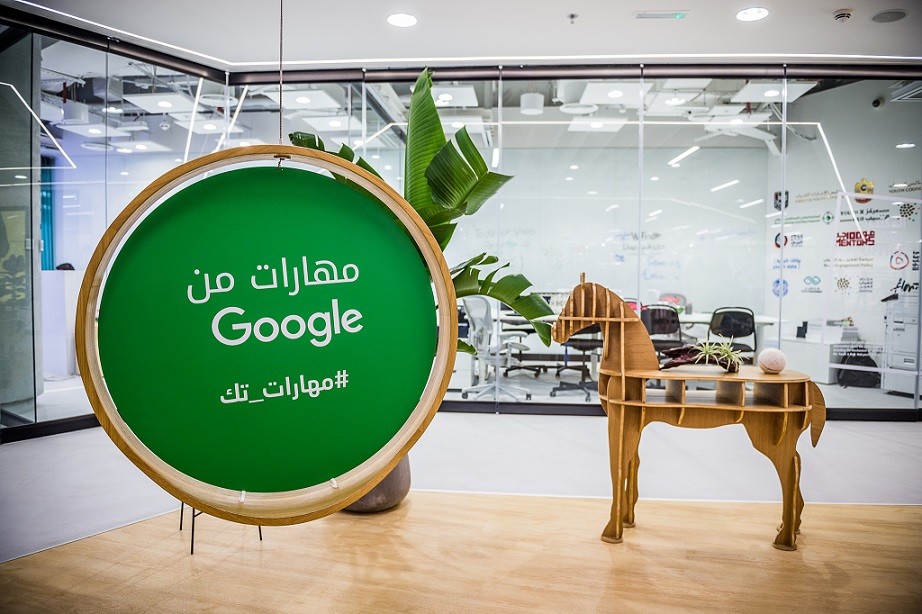
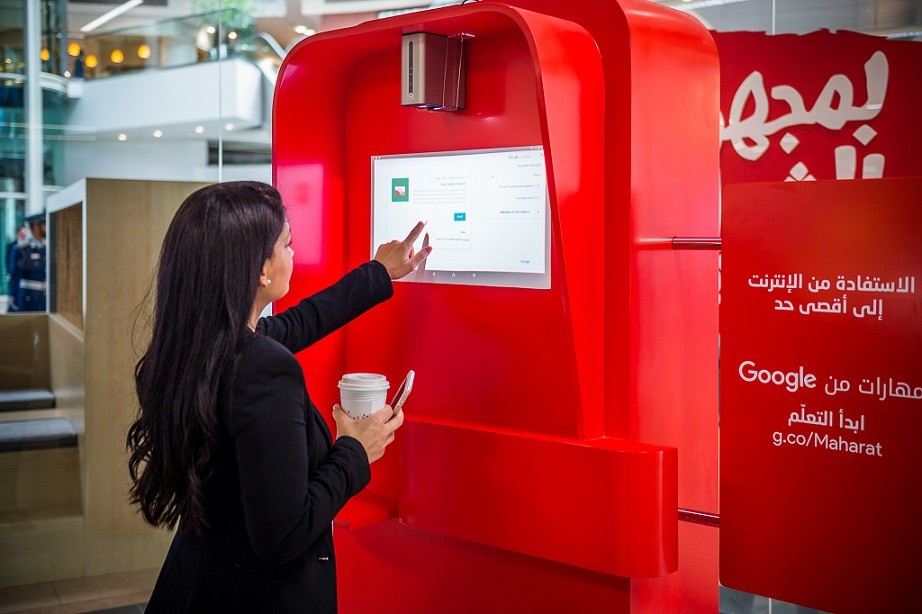
 Monday, April 16 (Dubai) — Google announced today the launch of ‘Maharat min Google’, a free digital skills-building program in Arabic, in an effort to help people in MENA find jobs, advance their careers or grow their businesses. Based on a blended learning model, ‘Maharat min Google’ provides free courses, tools, and in-person digital skills training to students, educators, job seekers and businesses.

The online platform — g.co/Maharat — has 100 lessons across 26 core topics in digital marketing that include search engine marketing, social media, video, e-Commerce, geo-targeting, and data analytics, among others. Google will provide a certificate upon completion of the full course, which takes about nine hours to complete.

“We’re delighted to be bringing ‘Maharat Min Google’ to the Middle East and North Africa — our contribution to the future of the workforce in MENA. This program is free of charge, available in Arabic and accessible on any platform. ‘Maharat Min Google’ draws on our 20-year history of building products, platforms, and services that connect people and businesses, helping them grow and succeed online. We know how valuable digital tools are to MENA’s future and we at Google are proud to be an engine supporting their growth,” said Matt Brittin, Google’s president of business operations across Europe, Middle East and Africa.

Google also signed an agreement with Mohammed bin Salman bin Abdulaziz Foundation (MiSK) which will conduct in-person trainings to more than 100,000 students across Saudi Arabia. Both collaborations with Injaz and MISK will target 50 percent female participation. Google is looking for further local partnerships across the region with governments, universities, private-sector businesses and nonprofits to expand the reach of its ‘Maharat min Google’ program.

“At the Misk Foundation, we emphasize the importance of this initiative as it is an extension to the our commitment to develop the Saudi youth’s skills, focusing in particular on 21st century skills which will result in a ready-to-market generation as well as prepare the next generation of entrepreneurs and innovator. And since obtaining digital skills is the cornerstone to achieve this, the Misk Foundation partnered on this initiative with Google and the other participating and sponsoring organizations,” said Deema Al Yahya, Adviser and CEO of MiSK Innovation.

Google also announced at the launch event that Google.org, Google’s philanthropic arm, is granting $1 million USD to INJAZ Al-Arab, a regional nonprofit organization, which will roll out in-person trainings to 100,000 students across 14 countries in MENA focusing on youth in underprivileged and  rural areas.

Akef Aqrabawi, CEO of INJAZ Al-Arab, said: “We are very happy with Google’s support to offer digital literacy skills across the MENA region and to expand the reach of a program like ‘Maharat min Google’. We share a common vision with Google and want to support the Arab youth, especially those in rural areas and underprivileged communities, in preparing them for future job opportunities and in empowering them to become successful entrepreneurs.”

In a recent study by the World Economic Forum, 1 in 5 jobs in the Arab world will require digital skills that aren’t widely available today. 51% of youth consider unemployment their biggest concern and only 38% believe their education gives them the skills they need to enter the workforce. In MENA, there are 30 million women educated, connected and of working age, which represents the largest economic opportunity in the region today.  More than 50% of university graduates are females, yet only 25% participate in the workforce.

Courses are available on g.co/Maharat and new lessons will be added in the future.

Why Domain Authority Matters?

15 Mar 2018 Blog

According to Sharad Agarwal, CEO of Cyber Gear, “Domain authority is a measure of the power of a domain name and is one of the most important search engine ranking factors. Domain authority is based on three factors: Age, Popularity and Size. Web site owners need to focus on domain authority to ensure that their brand is popular on the web.”

‘Domain Authority’ of a web site is also important since it can ascertain the following:

  • Prestige of a website and its authors
  • Quality of the information presented
  • Information and website centrality
  • Competitive situation around a subject

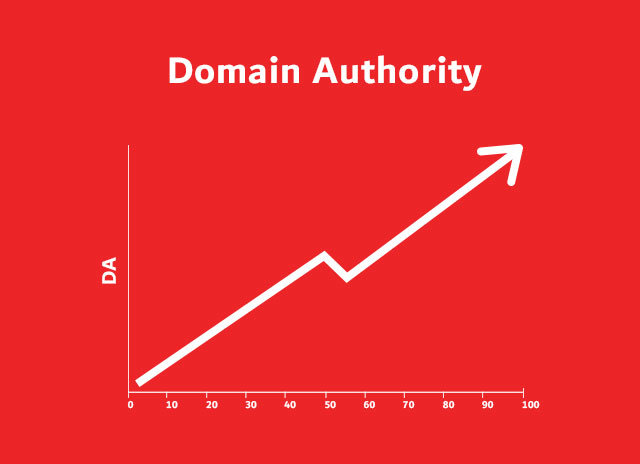
Domain Authority (DA) is a search engine ranking score developed by Moz that predicts how well a website will rank on search engine result pages (SERPs). A Domain Authority score ranges from one to 100, with higher scores corresponding to a greater ability to rank based on an algorithm and weighted level metric.

Domain Authority is calculated by on the basis of age of domain, evaluating linking root domains, number of total links, MozRank, MozTrust, etc. into a single DA score. This score can then be used when comparing websites or tracking the ‘ranking strength’ of a website over time.

You can view a website’s DA by using MozBar (a free Chrome-extension), Open Site Explorer (a backlink analysis tool), the SERP Analysis section of Keyword Explorer and several other SEO tools across the web like Websiteseochecker.com.

Sites with a very large number of high quality external links are at the top end of the Domain Authority scale, whereas small businesses and websites with fewer inbound links may have a much lower DA score. Because of how Domain Authority is calculated, it’s best used as a comparative metric when doing research in the search results and determining which sites may have more powerful link profiles than others.

The best way to influence the Domain Authority metric is to improve your overall SEO. In particular you should focus on your link profile by getting more links from other well-linked-to pages.

GuestPosts.biz can help you build links from reputed portals.


Apple Pay Arrives In UAE

24 Oct 2017 Blog

The much awaited Apple Pay made its debut today in UAE. Six local banks – Emirates NBD, Mashreq, RAKBank, Emirates Islamic, HSBC and Standard Chartered are the first to offer Apple Pay in UAE, supported by Visa and MasterCard.

Recent research reveals that card spending has increased substantially in the last couple of years and UAE is heading towards a digital economy with cashless environment. Interestingly, the UAE is now among only 20 countries worldwide that now enjoy this payment facility.

How Does It Work?

Using Apple Pay is as easy as 1-2-3.

  1. Add your credit cards information to your iPhone’s Wallet app from the ‘Settings’ tab and following the prompts. You can even upload cards by using your phone’s camera to read the card details.
  2. Hold your device near a contactless card reader at where you’re making a purchase and use Touch ID to complete it. You can also do this action with your Apple Watch and even if you leave your iPhone far away, you can still use the Watch for Apple Pay.
  3. The Touch ID step is also available on iPads and Macs that support it. For in-app purchases, a user just needs to tap the ‘Buy with Apple Pay’ button.

In the soon to be launched, iPhone X. Face ID will be used to authenticate an Apple Pay purchase.

Who Can Use It?

Users will have to update their devices to iOS 11 or later and select United Arab Emirates as their region as well as have an iCloud account.

Apple Products Supported

  • iPhone 6 or later in stores, apps, and websites in Safari
  • iPad Pro, iPad Air 2 or iPad mini 3 and later for use on apps and websites
  • Apple Watch in stores and apps
  • Mac introduced in or after 2012 running macOS Sierra or later and Touch ID on Macbook Pro Touch Bar

How Secure Is It?

With Apple Pay, your card number isn’t exactly stored on the iPhone, on Apple servers or shared with merchants. Instead of the traditional method of storing details in devices, a unique device account number is assigned and encrypted, which is securely stored in a secure element on the device. Each transaction then, is authorised with a one-time dynamic security code.

You can view your last transactions in your Apple Wallet, and some allow you to see the last ten transactions. Each bank differs on what information will be displayed, so it’s best to check with your bank to see exactly how this works.

And even if you lose your iPhone, you don’t have to panic. By using ‘Find My iPhone’ or by going to iCloud.com, you can put a device in Lost Mode, which automatically suspends all the cards in Apple Pay.

What’s Coming?

Soon, you’ll even be able to send and receive money over iMessage. Move over banks!

Cyber Gear is now offering regional ecommerce web sites and mobile apps, the facility to integrate their shopping carts to accept payment through Apple Pay.

1 5 6 7 8

Search

+